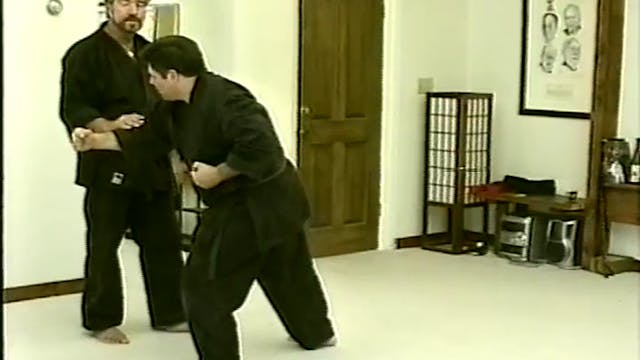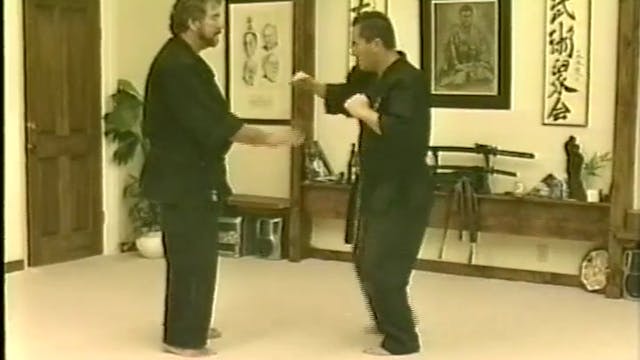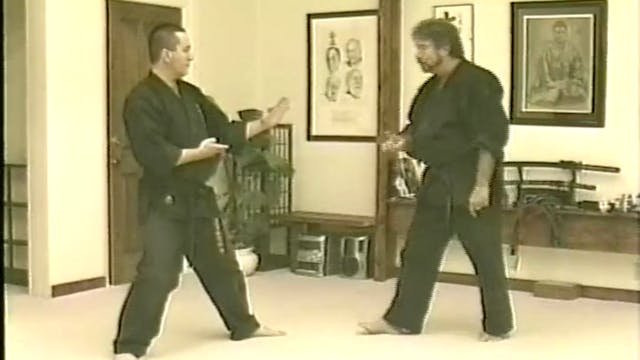
The Kosho Compendium - Lifetime Access
The entire library of Bruce Juchnik's DVD collection. Over 200 training videos.
Including:
Kosho Curriculum Ranking Series
Historical Videos
Advanced Escrima and Arnis
Concepts and Principles of Kosho - Unique to the Art
Advanced Striking Strategies
Kata and Bunkai - an in depth analysis
Kempo History and Controversy
Interview series with notable masters
Iaido
Instructor Training
Jo Kata
Kata to Kumite
Magic of Kosho
Shiatsu - healing arts
Shodo - the way of the brush
And more…..
-
Principles of the Octagon
-
Walking Cane
-
Body Awareness
-
Did You Know? The Gatekeepers
-
Did You Know? Nick Cerio
-
Did You Know? Dennis Decker
-
Did You Know? Wally Jay
-
Did You Know? Dennis Palumbo
-
Sifu Decker Westmont 1984
-
Nick Cerio Kempo and Kosho Demo in Hawaii
-
Terry Lee With Hanshi
-
MACS Newsletter Brazil
-
Tribute to Imi Okazaki
-
MACS Newsletter #3
-
MACS Newsletter #2
-
Shiatsu Summit 1989
-
Robert Trias Memorial
-
Hall Of Legends_2009
-
Early 80s Kosho
-
Did You Know Remy Presas
-
Did You Know Thomas SH Young
-
DYK Rick Alemany
-
Did You Know?? James Mitose
When James Mitose began his teaching in 1942, at the encouragement of the late Robert Trias, he had no idea how martial arts, and specifically Kempo, would be viewed by people in the future. If he had known, his decision to teach may have been different.
When I met James Mitose, my purpose was...
-
DYK Bing Fai Lau
-
DYK Imi Okazaki
-
DYK Dan Inosanto
-
Debana Waza
-
Reverse Caging
-
DYK Robert Trias
Insights on the Father of Karate in America - Robert Trias. A true Scholar Warrior.
-
Pinan 1-5 #2
This continuation of the Pinan series presents Pinan Shodan through Godan as Hanshi Juchnik now interprets them through his time with Mitose Sensei from 1977 until 1981. The tape works through gamae in motion, the relationship between hand manipulation and base manipulation, and a different way o...
-
Naihanno
The Nai Han No, or Naihanchi kata, is presented as it was performed by James Mitose Sensei, distinct from most Naihanchi or Tekki katas seen in other systems. The tape explores the philosophical aspects of the form, in which the practitioner positions themselves so that no matter how an opponent ...
-
Nekobuto
The Nekobuto, or cat dance form, was passed from James Mitose to Robert Trias and named in respect for Yamaguchi, founder of Japanese Goju Ryu. This tape presents Nekobuto Shodan, Nidan (also called the Geri kata for its early high kicks), and Sandan, with attention to low stances, double strikin...
-
Kusanku
The Kusanku form, also known as Kanku, originated in Okinawa with a Chinese military attaché and entered the Kai through Bobby Lowe and Thomas Young. This tape presents both the Sho and Dai (short and long) versions, with bunkai that draws on otoko no atemi and the escaping arts. Hanshi Juchnik d...
-
Naihanchi
The Naihanchi kata, traced to the Chinese form Tamsui meaning springing leg set, is one of the oldest preserved forms in the Okinawan and Japanese arsenal. Hanshi Juchnik presents the Kosho Ryu interpretation with close-up attention to the centers and alignments between the third eye, the tanden,...
-
Ennogyo
This tape covers the Ennogyo forms of Kosho Ryu, including Ennogyo Shodan, Nidan, and Ennogyo San, with emphasis on the connection between the kata and the monkey form, along with elements of Bagua. Hanshi Juchnik discusses Mitose Sensei's affinity for monkey, or Saru, and explains how the form i...
-
Empi
The Empi kata, also known as the Flying Swallow form, is presented with its lineage from Okinawa through Mas Oyama to Bobby Lowe, then to Mitose, Young, and Hanshi Juchnik. The tape emphasizes movement, mobility, angles, and the integration of both onna no atemi (female percussion striking) and o...
-
Pinan 1-5
The Pinan kata, also known as Heian, came into Kosho Ryu through the Kyokushinkai system via Bobby Lowe and Thomas Young, with Mitose Sensei encouraging that they be preserved out of respect for Funakoshi and the founders of Okinawan and Japanese karate. This tape introduces the basic motions and...
-
Knife Pathways
-
Juni Ippo Kata
The Juni Ippo kata, first forms of Kosho Ryu, were brought into the system by Robert Trias of Shuri Ryu and preserved within the Ryu at his request before his passing. Hanshi Juchnik walks through the subtleties of the form and explains that the way each kata is presented is meant to set up the u...
-
Juni Ippo #2
This tape continues the study of the Juni Ippo kata, the very first forms in Kosho Ryu, introduced to the system by Robert Trias of Shuri Ryu during his trips to Hawaii in the 1940s. Hanshi Juchnik works through Juni Ippo Shodan, Nidan, and Sandan, demonstrating the three different blocks and how...
-
Introduction to Kosho Ryu
-
Kata no Michi #3 - Honored Forms of Kempo
This DVD presents forms from many of the related Kempo systems that evolved from James Mitose's teaching in Hawaii from 1942 to 1946. Hanshi Juchnik introduces the project of unifying these arts through respect and the search for similarities, with forms performed by senior practitioners represen...
-
Triangulation
-
Kata no Michi #2 - Concepts
This second DVD accompanies the Kata no Michi textbook and goes deeper into the concepts and theories within the text. Hanshi Juchnik explains mind, wind, and direction in detail, where mind represents the part of the anatomy free from bondage and able to initiate motion, wind represents inertia ...
-
Kempo History
-
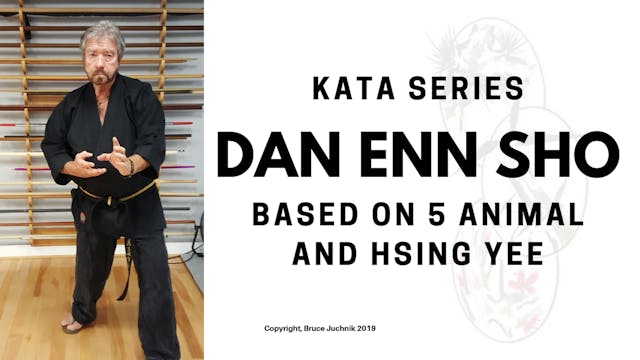
Dan Enn Sho
This tape presents the Dan Enn Sho form, brought into the Sei Kosho Shorei Kai through the late Robert Trias and traced back to its Chinese origins in the Hebei school of Xing Yi under master Li Cunyi. The kata reflects characteristics of several of the twelve animals of Xing Yi, including the cr...
-
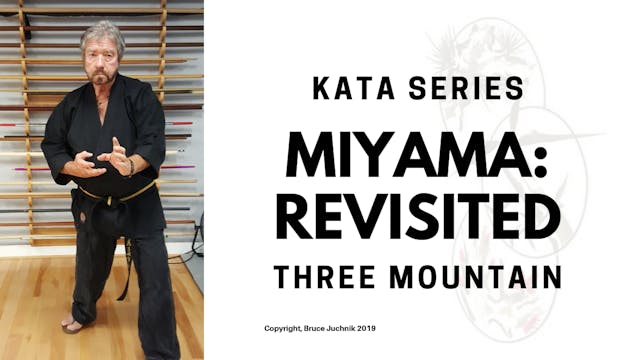
Miyama: Three Mountain Revisited
This more advanced look at Miyama, primarily Miyama One, breaks through some of the barriers that arise when practitioners view the form through their existing assumptions about martial arts. Hanshi Juchnik emphasizes that kata and kumite are not separate, that any movement of the form should all...
-
Kansetsu Waza
-
Insights #10
This class continues the blade work with attention to the subtleties that connect weaponry to everything else in Kosho Ryu. Hanshi Juchnik introduces the difference between repetition and recall, with recall described as the return of feeling rather than the return of moves. The discussion covers...
-
Insights #12
The final tape in the Insights series addresses the stylized mind and how patterns become traps. Hanshi Juchnik covers the forward and retracting motion most practitioners ignore, the art of anticipation as something the body does rather than the head, and a basic blocking-and-hit sequence used t...
-
Insights #11
This class introduces the term "wild energy" as new vocabulary for what happens when an opponent's skeletal and muscular structure is dispersed so that it cannot focus or move properly. Hanshi Juchnik uses the rock and water analogy where the rock entering scatters everything around it, and the r...
-
Lessons #2
-
Lessons #1
-
Lessons #3
-
Keys to Kempo - The Octagon
Expansion of the key concepts related to the octagon.
-
Last Warrior - Anton Krucky
-
Masters Series #1
-
Masters Series #2
-
Masters Series #3
-
Discussion #3 Energy
-
Iaido with Mike Brown Sensei
-
Discussion #2 Growth
-
Discussion #4 Contour Hit
-
Kosho Eyes
-
Gamae Revisited
-
Lower Base Cutting
-
Layered Hitting
-
Kosho Geri
-
Weaponry #1
-
Walking Stick
-
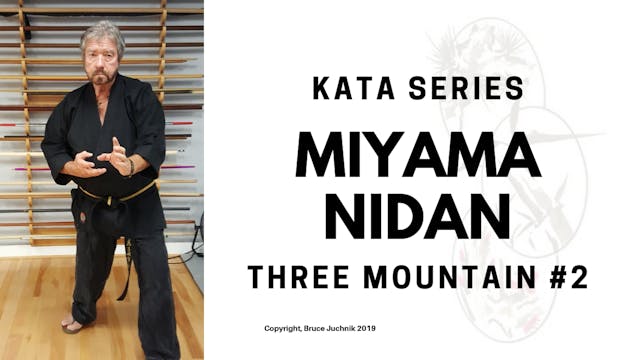
Miyama - Three Mountain #2
The second section of the Miyama Kata works with gliding movement, like a mountain range with climbs and plateaus, transitioning between long, intermediate, and close range. Hanshi Juchnik focuses on the shuto and how it functions as both a strike and a parry, and demonstrates timing and gliding ...
-
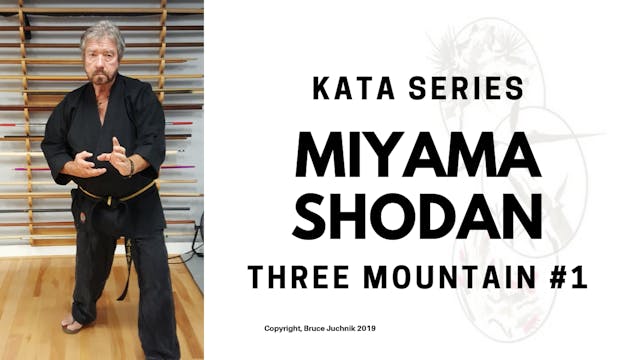
Miyama - Three Mountain #1
The Miyama no Kata was developed by Hanshi Juchnik to teach the practitioner more about hand positioning, routine, movement, and fluidity. This first section emphasizes the rolling hand movements and the principle that the body moves the hands, not the other way around. The tape covers the three ...
-
Tribute to Thomas S H Young
-
Miyama - Three Mountain #3
The third section of the Miyama Kata deals with rooted technique, peaks rather than rolling hills or plateaus, and incorporates work from the sanchin and otoko atemi along with movements drawn from the jo, sword, and bladed technique. Hanshi Juchnik emphasizes that the form is frozen but the tran...
-
The Senses
-
Stick Entry Tricks
-
Steps of Kempo #1
-
Stages - Blocking
-
Slip Punch
-
Slip Punch Revisited
-
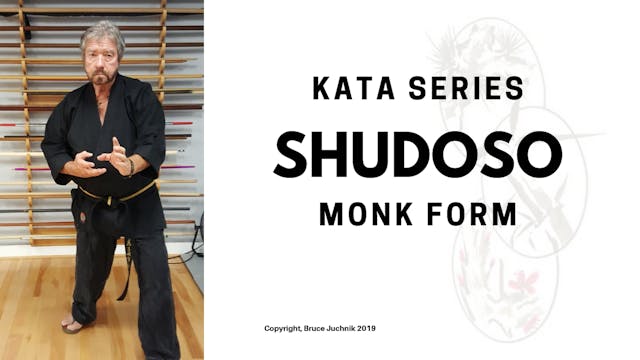
Shudoso
Shudoso, also called the monk form, is presented in dedication to Robert Trias, the first man to open a martial arts school in this country and a major figure in the preservation of Kosho Ryu. The form was located on rare 16mm film at a garage sale by Art Keawe, one of Trias's chief instructors, ...
-
Shiatsu #4
-
Shiatsu #3
-
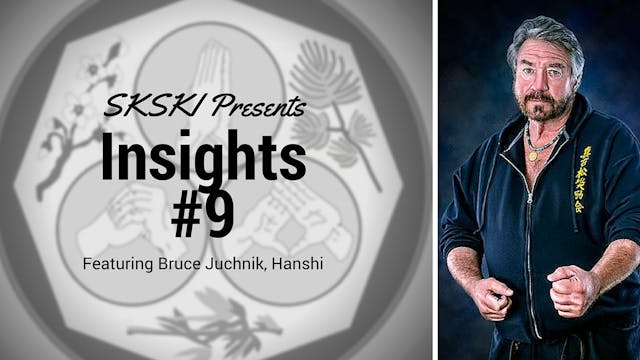
Insights #9
This class introduces weaponry through the lens of illusions, building on the previous Naihanchi work by showing what was always present but went unseen. Hanshi Juchnik addresses the danger of labels, the way clinging to one expression of a movement closes off a million others, and the limits pra...
-
Shiatsu #2
-
Shiatsu #1
-
Insights #8
This class focuses on Naihanchi kata as a study of space rather than a study of bodies. Hanshi Juchnik works through the trailer movement seen in slow film exposures (the sparkler effect), the one-dimensional way humans prefer to see things, and breaks down the first motion of Naihanchi using the...
-
Insights #6
This class continues the work on senses with the principle that if a practitioner creates the illusion, it can become the reality. Hanshi Juchnik introduces the exchange method, where money, words, sex, or vocabulary serve as the power base of different personality types, and applies the same pri...
-
Insights #7
This class addresses the criticism that the material on tape looks staged, with Hanshi Juchnik turning the question on its head: the reason staged movement does not work is that it ignores spontaneity, environment, and appreciation for the opponent. The discussion covers the thirty-four methods o...
-
Insights #3
This class works through power generation from short range using the S-curve as a refinement of the zigzag pattern. Hanshi Juchnik explains how the zigzag stops energy at each point while the S-curve keeps it fluid, demonstrates how striking from a ten-inch, two-inch, or three-inch distance still...
-
Insights #1
Hanshi Bruce Juchnik opens the twelve-tape Insights series with a class focused on advanced Octagon work and how to describe movement properly to a student. The discussion covers the relationship between projected and retracting sides of the body, triangulation across the upper and lower planes, ...
-
Insights #5
This class introduces the five senses (plus the sixth) in martial application, opening with Hanshi Juchnik's frustration at a society that produces glorified martial artists rather than thinking ones. The discussion covers visual plane, auditory, touch, smell, and taste, including how taste enter...
-
Insights #2
This class focuses on escaping as the foundation of all motion in Kosho Ryu, with Hanshi Juchnik addressing the misconception that escaping is a separate study from karate, jujitsu, judo, or Kempo. The discussion covers escaping from posture as an opponent loads up to strike, moving with the oppo...
-
Insights #4
This class addresses the coordination of upper and lower body during striking, with attention to how the feet generate the power that the hands deliver. Hanshi Juchnik works through redirecting an opponent's momentum, the ninety-degree blocking angle that takes the incoming line and shoots it up ...
-
History Perspective
-
Hand Combinations #1
-
Gathering 2004
-
Gathering 1998
-
Gathering 1996
-
Gankaku
The kata Gankaku, meaning crane on a rock, traces its lineage through Okinawa to Japan via Gichin Funakoshi, Mas Oyama, Bobby Lowe, and into Kosho Ryu. This tape places particular emphasis on the bunkai, drawing connections to the Fukien province movements and White Crane technique that preceded ...
-
Connections #2 Pinan
-
Creative Blocking
-
Connections #1 Juni Ippo
-
Connections #3
-
Bunkai
Hanshi Bruce Juchnik introduces the application of the Pinan forms with a focus on timing and distancing rather than technique collection. The tape covers Hyoshi (timing), ma-ai (distancing), the Shochiku Bai of the Mitose family line, and the Octagon as a tool for understanding the relationship ...
-
Blocking 2
-
Bunkai Another Look
In this second tape on bunkai, Hanshi Bruce Juchnik continues the discussion of why practitioners do form, addressing the tendency among martial artists to become nearsighted in their understanding of kata. He clarifies that bunkai cannot be fully explained on a single tape, or even three hundred...
-
Arnis Counters
-
Advanced Escrima #8 Counters
-
Advanced Escrima #6 Double Blade
-
Weaponry of Hanshi #1
-
Advanced Escrima #2
-
Advanced Escrima #4
-
Advanced Escrima #3
-
6th Kyu #2
-
Advanced Escrima #5 The Void
-
Contour Hitting
-
Dojo Etiquette
-
Electro Magazine Dec 1993
-
Electro Magazine Rick Alemany
-
Electro Magazine Ralph Castro
-
Controversy #3
-
Circles #4
-
Circles #3
-
Controversy #2
-
Circles #1
-
Chusan Waza
-
Circles #2
-
8th Kyu #2
-
7th Kyu #2
-
Kata to Kumite 4
-
Transitions #4
-
Transitions #1
-
Transitions #3
-
Transitions #2
-
Kata no Michi #1 - Kata of Kosho Ryu
-
Kata The Why of Kata
This tape addresses the deeper purpose behind kata practice and why each movement should be examined as part of a longer discussion rather than treated as a sequence to memorize. Hanshi Juchnik explains the meaning of bunkai as discussion, introduces the concept of the warrior scholar as someone ...
-
Kata Another Look
This tape steps back from any single form to address how kata should be approached as a practice. Hanshi Juchnik introduces the framework of mind, wind, direction, fluidity, triangulation, and the meeting of bone and flesh, drawing a parallel to the hierarchy of life: air, water, food. He discuss...
-
Why Kata
This tape opens a discussion among the class on the meaning and purpose of kata, addressing how few practitioners, including some grandmasters, look in real depth at their own forms. Hanshi Juchnik defines kata broadly as any organized attempt to position and reposition the body against a would-b...
-
Kosho Essentials
-
Controversy #1
-
Kata to Kumite 5
-
Kata to Kumite 3
-
Kata to Kumite 2
-
Kata to Kumite 1
-
Kata to Kumite 6
-
Movement #4
-
Movement #2
-
Movement #5
-
Movement #3
-
Movement #1
-
Movement #6