Kusanku
The Kosho Compendium - Lifetime Access
•
56m
The Kusanku form, also known as Kanku, originated in Okinawa with a Chinese military attaché and entered the Kai through Bobby Lowe and Thomas Young. This tape presents both the Sho and Dai (short and long) versions, with bunkai that draws on otoko no atemi and the escaping arts. Hanshi Juchnik discusses how kata should sometimes be approached as a koan or riddle, why bunkai cannot be reduced to the waza shown in tournament demonstrations, and demonstrates the double blocking maneuver and other movements with attention to centering and rotation.
Up Next in The Kosho Compendium - Lifetime Access
-
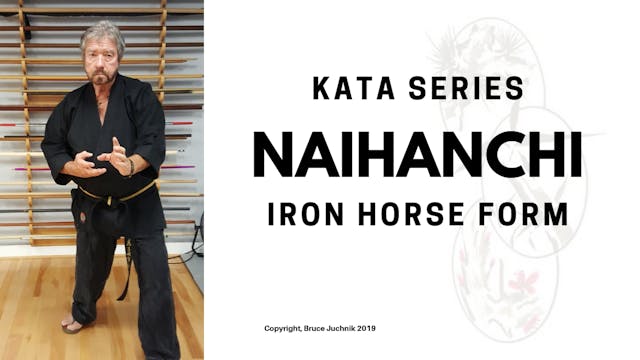
Naihanchi
The Naihanchi kata, traced to the Chinese form Tamsui meaning springing leg set, is one of the oldest preserved forms in the Okinawan and Japanese arsenal. Hanshi Juchnik presents the Kosho Ryu interpretation with close-up attention to the centers and alignments between the third eye, the tanden,...
-
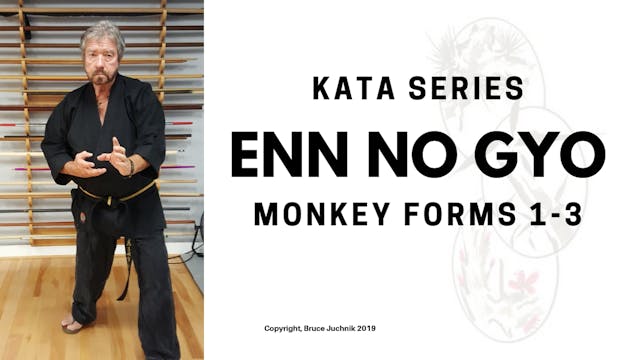
Ennogyo
This tape covers the Ennogyo forms of Kosho Ryu, including Ennogyo Shodan, Nidan, and Ennogyo San, with emphasis on the connection between the kata and the monkey form, along with elements of Bagua. Hanshi Juchnik discusses Mitose Sensei's affinity for monkey, or Saru, and explains how the form i...
-
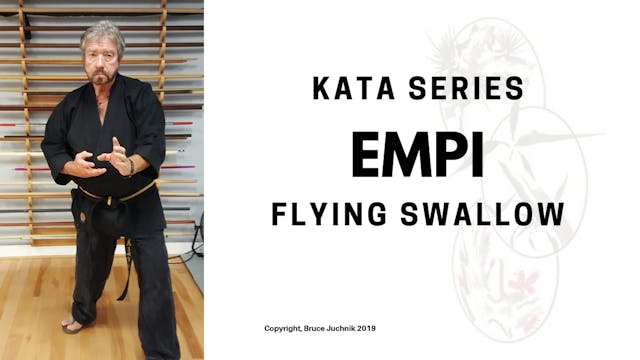
Empi
The Empi kata, also known as the Flying Swallow form, is presented with its lineage from Okinawa through Mas Oyama to Bobby Lowe, then to Mitose, Young, and Hanshi Juchnik. The tape emphasizes movement, mobility, angles, and the integration of both onna no atemi (female percussion striking) and o...